
How Heat Pumps Work in Northern Virginia Winters — and How to Know If Yours Is Ready
Why does your heat pump blow cool air in January? Why is your electric bill so high? A plain-English guide to heat pump winter operation for Northern Virginia homeowners — balance points, backup heat, defrost cycles, AUX vs. EMERGENCY heat, and pre-winter prep.
❄️ Quick Answer: Heat Pumps in Northern Virginia Winters
- Heat pumps extract heat from outdoor air even in cold temperatures — but efficiency decreases as temperatures drop and backup resistance heat must supplement below about 35–40°F
- Supply air from a heat pump (90–95°F) feels cooler than from a gas furnace (120°F+) — this is normal and not a sign of malfunction
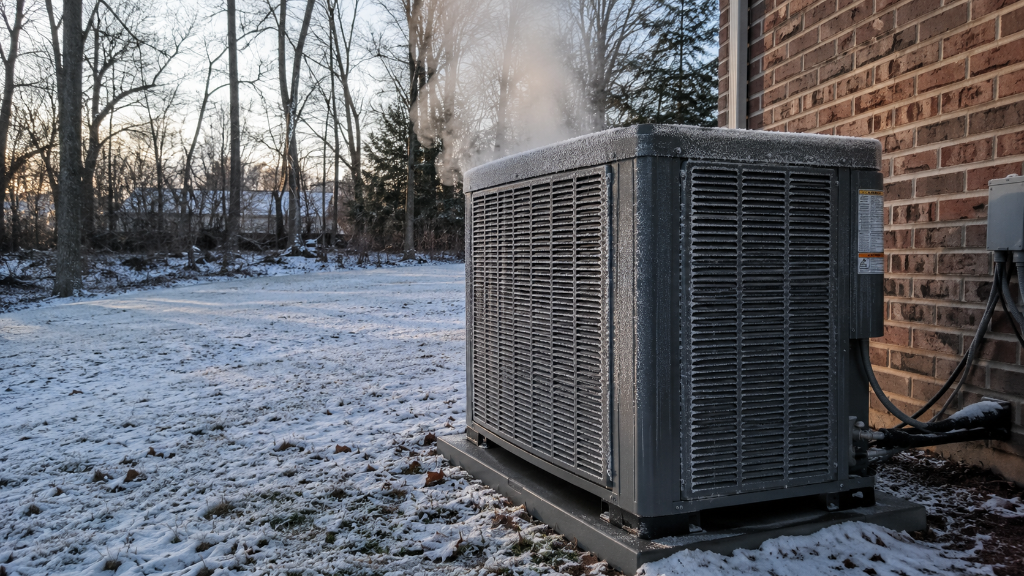
- A thin layer of frost or ice on the outdoor unit in winter is normal — the system defrost cycle clears it automatically every 30–90 minutes
- AUX heat and EMERGENCY heat are different — AUX engages automatically when needed; EMERGENCY heat bypasses the heat pump entirely and should only be used when the heat pump is damaged
- Northern Virginia winters regularly reach 15–30°F overnight — well into the range where backup heat engagement drives winter heating bills significantly higher than homeowners expect
- A pre-winter heat pump tune-up in September or October is the most important annual maintenance step for heat pump homeowners in Northern Virginia
More Northern Virginia homes are heated by heat pumps than by any other system type — and every winter, Fairfax Mechanical fields questions from homeowners who are confused about their heat pump's behavior in the cold. Why does the air feel lukewarm? Why is there ice on the outdoor unit? Why is the electric bill so much higher than expected? These are all answerable questions once you understand how a heat pump actually works in winter — and what it's doing that a gas furnace isn't.
This guide covers everything a Northern Virginia heat pump homeowner needs to know to understand their system in winter, recognize normal vs. abnormal behavior, and take the right steps to prepare for heating season.
How does a heat pump actually heat your Northern Virginia home in winter?
A heat pump doesn't generate heat — it moves heat. Even in cold winter air, there is thermal energy present. A heat pump extracts that energy using refrigerant, compresses it to raise its temperature, and delivers it inside. This is fundamentally different from a furnace, which burns fuel to create heat. A heat pump that's working correctly in 35°F weather is moving outdoor heat energy inside, not creating heat from electricity.
The efficiency of this process — measured by the Coefficient of Performance (COP) — is what makes heat pumps economical most of the time. A heat pump with a COP of 2.5 delivers 2.5 units of heating energy for every 1 unit of electrical energy consumed. Electric resistance heat strips — the backup system in most Northern Virginia heat pump installations — have a COP of exactly 1.0: one unit of heat for one unit of electricity, with no thermal multiplication.
As outdoor temperatures drop, the amount of thermal energy available in the outdoor air decreases. The heat pump must work harder and compress refrigerant more to extract the same amount of heat — and its efficiency (COP) drops. At some outdoor temperature — the balance point — the heat pump output exactly matches the home's heating demand. Below that temperature, the heat pump alone can't keep up, and backup heat must engage.
🌡️ The Most Common Heat Pump Misconception in Northern Virginia: "It's Blowing Cold Air"
The supply air from a heat pump operating in heating mode typically ranges from 90–95°F — warm enough to heat the home effectively, but noticeably cooler than the 120–140°F supply air from a gas furnace. When warm air from a 95°F supply hits your hand in a 70°F room, it feels barely warm. When 120°F furnace air hits your hand, it feels noticeably hot.
This is the most common reason Fairfax Mechanical receives "my heat pump isn't working" calls in January. The system is working perfectly — it's producing 95°F air that's heating the house — but it doesn't feel like heat because the homeowner is comparing it to furnace air. If the house is maintaining the thermostat setpoint, the heat pump is working correctly regardless of how the supply air feels on your hand.
When to actually be concerned: If the house is consistently 3–5°F or more below the thermostat setpoint, and the system has been running for an hour or more without gaining on the setpoint, that's a signal that the system may not be performing correctly for current conditions.
What is the heat pump balance point — and why does it matter for Northern Virginia winters?
The balance point is the outdoor temperature at which your heat pump's heating output exactly equals your home's heat loss. Above the balance point, the heat pump handles all heating efficiently. Below it, backup electric resistance heat must supplement — and resistance heat costs roughly 2.5–3× more per BTU than heat pump output.
For most Northern Virginia homes with standard heat pumps, the balance point falls somewhere between 30–40°F. This means that on a 35°F day, the heat pump may be running at full capacity while backup heat also engages to make up the difference. On a 20°F night — common in January and February across Fairfax County, Reston, and Herndon — a significant portion of heating may come from backup resistance strips.
This is why Northern Virginia heat pump owners often experience a winter electricity bill surprise: the system is doing exactly what it was designed to do, but the backup resistance heat that runs during cold nights is significantly more expensive to operate than heat pump output. Understanding this dynamic is the starting point for managing winter heating costs with a heat pump system.
| Outdoor Temp (°F) | Heat Pump Mode | Backup Heat Status | Relative Cost |
|---|---|---|---|
| Above 45°F | High efficiency heat pump | Off — not needed | Low — most efficient range |
| 35–45°F | Heat pump + some backup | Engages periodically | Moderate — some efficiency loss |
| 20–35°F | Heat pump at capacity + backup | Runs frequently | Higher — backup heat adds cost |
| Below 20°F | Heat pump at limit + heavy backup | Runs most of the time | Highest — mostly resistance heat cost |
What is the difference between AUX heat and EMERGENCY heat on my Northern Virginia heat pump?
AUX heat (auxiliary heat) and EMERGENCY heat are both modes that use the backup resistance heat strips — but they work in fundamentally different ways. AUX heat engages automatically and works alongside the heat pump. EMERGENCY heat bypasses the heat pump entirely and runs on resistance strips only. Using EMERGENCY heat when your heat pump is functional dramatically increases operating cost.
✓ AUX Heat — Normal Operation
AUX heat engages automatically when the system's controls determine that the heat pump alone cannot meet demand — typically when outdoor temperatures drop significantly below the balance point or when the setpoint requires a large temperature rise quickly.
In AUX mode, the heat pump continues to run alongside the backup strips, contributing whatever heating output it can while the strips make up the deficit. This is the most efficient way to run backup heat in cold conditions because the heat pump still contributes its 2.5–3× efficiency multiplier on the portion of output it handles.
When you see "AUX" on the thermostat display: This is normal winter behavior. Do not switch to EMERGENCY heat.
⚠ EMERGENCY Heat — Only When Heat Pump Fails
EMERGENCY heat mode completely disables the heat pump and runs entirely on backup resistance heat strips. Operating cost is roughly 2.5–3× higher than AUX mode for the same heating output because the heat pump's efficiency multiplier is absent.
EMERGENCY heat exists for one specific situation: when the heat pump outdoor unit has failed (compressor failure, refrigerant leak, physical damage) and needs to be shut down while awaiting repair, but the home still needs heat. It is not intended for use during normal cold weather.
When to use EMERGENCY heat: Only if the outdoor unit has physically failed or been damaged. If the house is just cold in winter, never switch to EMERGENCY heat — use the normal HEAT or AUX mode and call Fairfax Mechanical to diagnose the underlying issue.
Why is there ice on my outdoor heat pump unit in winter — and when should I be concerned?
Ice or frost on the outdoor unit during winter operation is normal and expected — heat pumps are designed to handle this through an automatic defrost cycle. What you should know is the difference between normal defrost behavior and the kind of ice accumulation that indicates a problem.
❄️ Normal vs. Problematic Outdoor Unit Ice in Northern Virginia
As the heat pump extracts heat from outdoor air, the evaporator (outdoor coil in heating mode) can drop below freezing and accumulate a thin frost layer. The system automatically enters a defrost cycle every 30–90 minutes — reversing refrigerant flow to melt the frost, which produces a brief steam cloud and a temporary warm air smell. This is completely normal. The fan may stop briefly during defrost and resume when complete.
If the defrost cycle isn't working properly, ice can accumulate beyond the fins and onto the refrigerant lines, cabinet, or base — or cover the entire unit without clearing. This restricts airflow and can damage the compressor. Causes include: defrost control failure, low refrigerant preventing proper heat exchange, fan motor failure, or blocked airflow. Do not chip ice off the unit — call Fairfax Mechanical for diagnosis. You can pour lukewarm (not hot) water over the unit to help clear heavy ice accumulation while waiting for service.
"The most common heat pump call we get in December in Northern Virginia is: 'My heat pump is blowing cold air and there's ice on the outdoor unit.' Usually the answer is: the supply air is 90°F and the ice is normal defrost cycle frost. But occasionally it's a failing defrost board or low refrigerant that needs diagnosis. Knowing the difference between these two situations is what determines whether you need an emergency call or just a reassurance that the system is working."— Fairfax Mechanical Technical Team, Fairfax, VA
What are the warning signs that my heat pump isn't performing correctly in winter?
Normal heat pump behavior in winter can look alarming if you don't know what to expect. Here's how to distinguish normal cold-weather operation from signs that something is actually wrong.
| What You Observe | Normal or Problem? | What to Do |
|---|---|---|
| Supply air feels lukewarm (90–95°F) | Normal | Check that house is reaching thermostat setpoint — if yes, system is working |
| Thin frost/ice on outdoor unit that clears periodically | Normal | Nothing — this is the defrost cycle working correctly |
| "AUX" showing on thermostat display in cold weather | Normal | Nothing — this is expected backup heat engagement in cold temperatures |
| House 3–5°F below setpoint for more than 60 minutes | Potential problem | Check filter; if clear, call Fairfax Mechanical for assessment |
| Outdoor unit completely encased in ice that won't clear | Problem — defrost failure | Turn to EMERGENCY heat; call Fairfax Mechanical |
| Electric bill dramatically higher than same period last year | Possible efficiency issue | Check filter; schedule diagnostic visit — low refrigerant or component wear common causes |
| Unit makes loud grinding or banging in winter | Problem | Turn off system; call Fairfax Mechanical immediately |
What should Northern Virginia heat pump homeowners do to prepare for winter?
A pre-winter heat pump tune-up in September or October is the most important single maintenance step — timed to catch issues before heating season demand peaks. The tune-up protocol for heat pump systems in heating mode checks elements that differ from a summer AC tune-up.
☑ Northern Virginia Heat Pump Pre-Winter Checklist
- ☐Schedule a professional heat pump tune-up (September–October window) — Fairfax Mechanical is a Dominion Energy participating contractor for qualifying tune-up rebates
- ☐Verify refrigerant charge is within specification — low refrigerant in heating mode reduces output and can cause defrost failure
- ☐Test the defrost cycle and controls — defrost board failure is a common cause of winter performance problems
- ☐Inspect and test backup heat strips — resistance strips can fail silently and only become apparent during the coldest nights when they're needed most
- ☐Verify outdoor unit clearance — ensure 18" of clearance on all sides, remove any debris, leaves, or vegetation that accumulated during summer and fall
- ☐Replace air filter — a clean filter is especially important in heating mode when the system runs continuously during cold snaps
- ☐Test the thermostat emergency heat mode — verify it engages and that you know where the setting is before you need it in an emergency
- ☐Check outdoor unit placement and snow protection — if the unit is in a location that receives roof runoff or concentrated snow load, install a cover overhang (not cover the unit itself — never cover the unit)
"In Northern Virginia, heat pumps handle the bulk of residential heating — and most homeowners underestimate how much the backup heat strips cost to operate on cold nights. The most impactful thing a heat pump owner can do before winter is a professional tune-up that verifies refrigerant charge and tests the defrost system. A heat pump with degraded refrigerant will lose heating capacity right when it's needed most."— U.S. Department of Energy — Heat Pump Systems
Is your Northern Virginia heat pump ready for winter? Fairfax Mechanical's heat pump tune-ups include refrigerant verification, defrost cycle testing, and backup heat strip inspection across all of Northern Virginia.
Schedule a Pre-Winter Heat Pump Tune-Up →Frequently Asked Questions: Heat Pumps in Northern Virginia Winters
My heat pump is blowing air that doesn't feel warm — is it broken?
Probably not. Heat pump supply air in heating mode typically measures 90–95°F — noticeably cooler than the 120–140°F air from a gas furnace. Because this air is much closer to room temperature, it doesn't feel as warm on your hand even though it's above room temperature and is heating the space. The correct way to assess whether your heat pump is working is to check whether the house is reaching and maintaining the thermostat setpoint — not by how the air feels. If the house is maintaining setpoint, the system is working correctly. If it's consistently 3–5°F below setpoint for more than an hour, that's worth investigating.
Should I switch my heat pump to EMERGENCY heat when it's very cold in Northern Virginia?
No — unless your outdoor unit has physically failed or been damaged. EMERGENCY heat mode completely disables the heat pump and runs entirely on backup resistance heat strips, which cost approximately 2.5–3× more to operate per unit of heat than heat pump output. If your house is cold in winter but the outdoor unit appears to be running, the correct response is to leave the system in normal heating mode (it will engage AUX heat automatically as needed) and call Fairfax Mechanical to diagnose the underlying performance issue. EMERGENCY heat is for one situation: the outdoor unit has failed and needs to be shut down while awaiting repair.
There's ice on my outdoor heat pump unit in winter — is this normal?
A thin layer of frost or ice that accumulates and then clears every 30–90 minutes is completely normal — this is the system's defrost cycle operating correctly. You may notice the outdoor fan stopping briefly during defrost, and possibly a steam cloud when warm refrigerant melts the frost. What is not normal: thick ice that encases the unit without clearing, ice on the refrigerant lines extending from the unit, or ice that builds over multiple hours without the defrost cycle appearing to engage. If the unit is heavily iced over, switch to EMERGENCY heat (which disables the outdoor unit) and contact Fairfax Mechanical for defrost system diagnosis.
Why is my electric bill so high in winter with a heat pump in Northern Virginia?
The most common cause is backup resistance heat strip engagement during cold nights, which costs approximately 2.5–3× more per BTU than heat pump output. Northern Virginia winters regularly reach 15–30°F overnight from December through February — temperatures at which backup heat runs frequently. A secondary cause is degraded heat pump efficiency from low refrigerant, dirty coils, or a malfunctioning defrost system that causes the system to rely on backup heat more than it should. If your winter bills are significantly higher than in prior years for similar weather conditions, a refrigerant check and efficiency assessment from Fairfax Mechanical is worth scheduling.
Does Fairfax Mechanical provide pre-winter heat pump tune-ups in Northern Virginia?
Yes. Fairfax Mechanical provides heat pump pre-winter tune-ups across Fairfax, Reston, Herndon, McLean, Vienna, Falls Church, Arlington, Alexandria, Centreville, Burke, Chantilly, and throughout Northern Virginia. Heat pump tune-ups include refrigerant charge verification, defrost system testing, backup heat strip inspection, filter replacement guidance, and overall heating system assessment. Fairfax Mechanical is a Dominion Energy participating contractor for qualifying tune-up rebates. Schedule at fairfaxmechanical.co/contact.
Get Your Northern Virginia Heat Pump Ready for Winter Before Heating Season Peaks
Fairfax Mechanical provides heat pump pre-winter tune-ups across Fairfax, Reston, Herndon, McLean, Vienna, Falls Church, Arlington, Alexandria, and all of Northern Virginia. September–October appointments available now — before heating season demand peaks.
Need help with your AC?
Free estimate for any HVAC service in Northern Virginia.