Duct Cleaning & Sealing in Fairfax, VA
Duct cleaning when it is genuinely needed, duct sealing when the problem is leakage, and an honest assessment of which one your Fairfax County home actually has.
Quick Answer
Fairfax Mechanical provides duct cleaning and duct sealing in Fairfax, VA and across Northern Virginia. Cleaning removes accumulated debris after a renovation, water intrusion, or pest problem; sealing closes the leaks that let conditioned air escape and attic or crawlspace air enter. We inspect and pressure-test first, because the two services solve different problems and only one of them will fix your comfort complaint.
Cleaning and sealing solve different problems
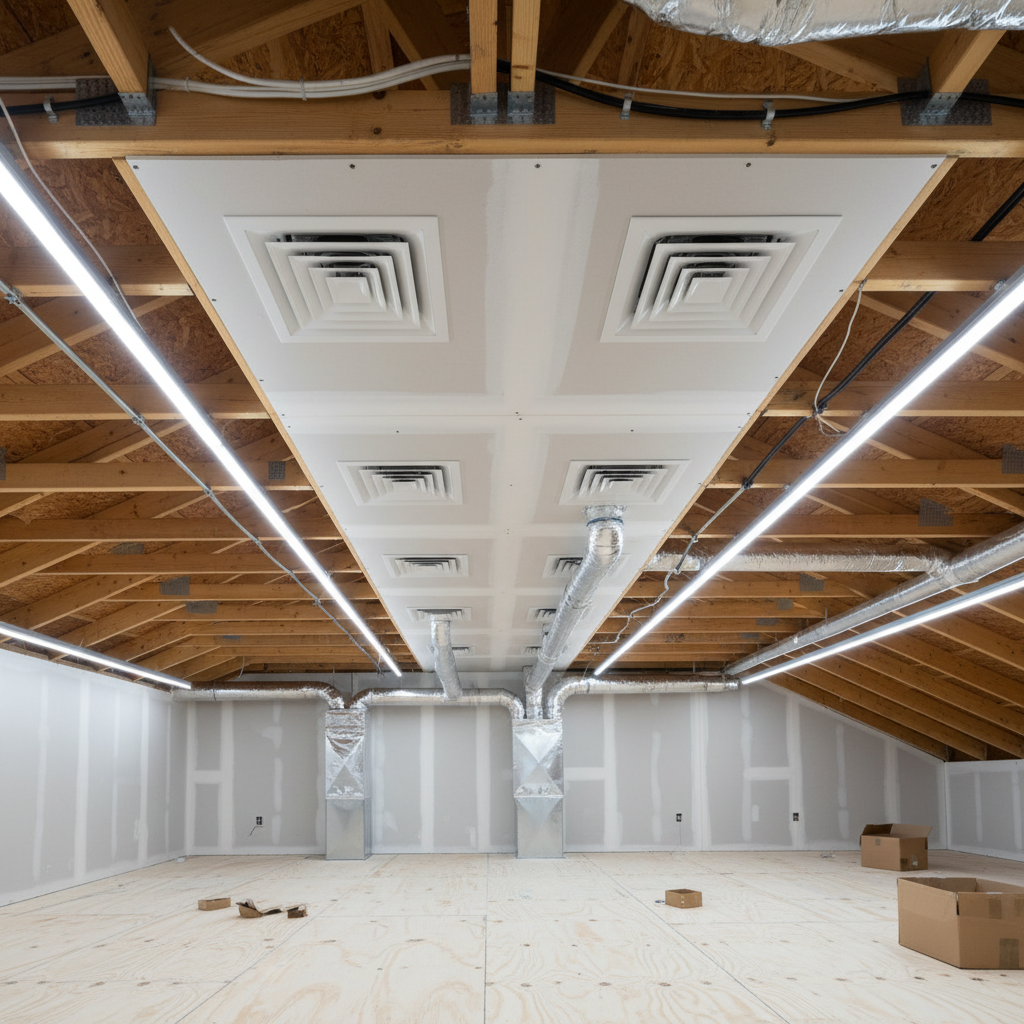
These two services are often sold as if they were the same thing, which is why homeowners come away unsure what they bought. Duct cleaning removes material that has already collected inside the duct system: construction dust, drywall dust, debris from a pest issue, or biological growth after a moisture problem. Duct sealing closes the gaps, disconnected joints, and unsealed penetrations that cause the duct system to leak air into an attic, crawlspace, garage, or wall cavity.
The difference matters because the symptoms overlap. A dusty house can be caused by a leaky return pulling attic air in, and sealing that return may solve it without any cleaning at all. A house with rooms that never heat evenly may have a design problem, a damper problem, or a leakage problem. Cleaning the ducts will not change any of those.
Our starting point is measurement. We inspect accessible ductwork, look at insulation condition and joint integrity, check filter and return sizing, and read static pressure at the air handler. Those readings tell us whether the duct system is restrictive, leaky, or simply delivering air to the wrong places.
When duct cleaning is genuinely justified
Routine cleaning of a residential duct system is not something we recommend on a schedule, and we will say so when a homeowner asks. Duct cleaning earns its place in specific situations rather than as periodic maintenance.
- Recent construction or a major renovation that filled the ducts with drywall and sawdust
- Water intrusion, flooding, or a long-running humidity problem inside the duct system
- Visible mold or biological growth on duct interiors or the air handler cabinet
- A rodent or insect infestation that left debris in the system
- A move-in situation where the previous occupants smoked indoors
- Heavy, visible debris at supply registers or inside the return plenum
What cleaning will not do
How duct sealing works and what it fixes
Duct leakage matters most when ducts run through unconditioned space: an attic that reaches one hundred thirty degrees in summer, a vented crawlspace, or a garage. A supply leak in an attic dumps cooled air into the hottest space in the house, and a return leak pulls that hot, humid, dusty air back into the system to be cooled and distributed.
Sealing closes those leaks. Depending on the system, that means mastic and mesh at accessible joints and boots, replacing failed tape and disconnected flex runs, sealing cabinet and plenum penetrations, and in some cases aerosol sealing for the portions of the distribution system that cannot be reached by hand. Sealing also reduces the amount of outside dust and humidity the system draws in, which is why it often improves indoor air more than cleaning does.
The other benefit is pressure balance. A duct system that leaks heavily on the return side starves the air handler and creates negative pressure in the house, which pulls unconditioned air through every gap in the envelope. Fixing the return side often changes how a house feels before any equipment is replaced.
What happens during a visit
We start with an inspection of the accessible duct system: attic trunks, basement and crawlspace runs, register boots, the air handler cabinet, and the return path. We check insulation, joint condition, support, and clearances. Static pressure readings are taken before any work so the improvement can be measured afterward.
Where cleaning is warranted, we use a vacuum system with the duct runs isolated and the supply and return registers opened in sequence, agitating the interior surfaces as we go. We protect the floors and furniture, and we photograph the interior condition before and after so you can see what was actually in the system.
Where sealing is the answer, we seal what is accessible, then verify with a pressure test or a flow measurement. The final walkthrough tells you what changed, what we could not reach, and what remains to be addressed if the system needs a design correction rather than a repair.
Duct repairs beyond cleaning and sealing
Some duct problems are not solved by cleaning or sealing because the ducts themselves are the issue. Collapsed flex duct in an attic, runs that were never properly supported, undersized trunks serving a finished basement, or a return path that consists of a single small grille in a hallway are design and installation problems.
In those cases the fix is repair or replacement of specific runs, adding return capacity, correcting transitions at the air handler, and in some homes adding zoning so that delivered airflow matches how the house is used. We quote that work as a defined scope with the expected effect on static pressure and room temperatures, not as an open-ended improvement.
For homeowners dealing with a single problem room, the fastest path is often a diagnostic visit rather than a full duct project. We measure airflow at the register, check the branch run, and confirm whether the room is starved of supply air or overwhelmed by heat gain from an unconditioned attic or a large window.
Ready for a free estimate on duct cleaning & sealing?
Get My Free EstimateDuct Cleaning & Sealing across Northern Virginia
Fairfax Mechanical serves homeowners in Fairfax, Burke, Springfield, Annandale, Lorton and the surrounding communities. Choose your city for local service details.
See all areas we serveGuides worth reading before you book
Frequently asked questions about duct cleaning & sealing
Get a free estimate for duct cleaning & sealing
Licensed Virginia HVAC contractor serving Fairfax and all of Northern Virginia. Call or request an estimate and we will confirm the next available appointment.
11325 Random Hills Rd #360, Fairfax, VA 22030