
Indoor Air Quality in Fairfax, VA
Filtration, humidity control, ventilation, and purification for Northern Virginia homes. We start with the cause of the problem rather than the product that claims to solve it.
Quick Answer
Fairfax Mechanical provides indoor air quality services in Fairfax, VA and across Northern Virginia, covering whole-home filtration, humidity control, ventilation, and purification. Most indoor air complaints in this region come from one of four causes: particles, humidity, stale air, or a pollutant source that filtration cannot remove. We identify which one is driving your symptoms before recommending equipment.
What indoor air quality actually means
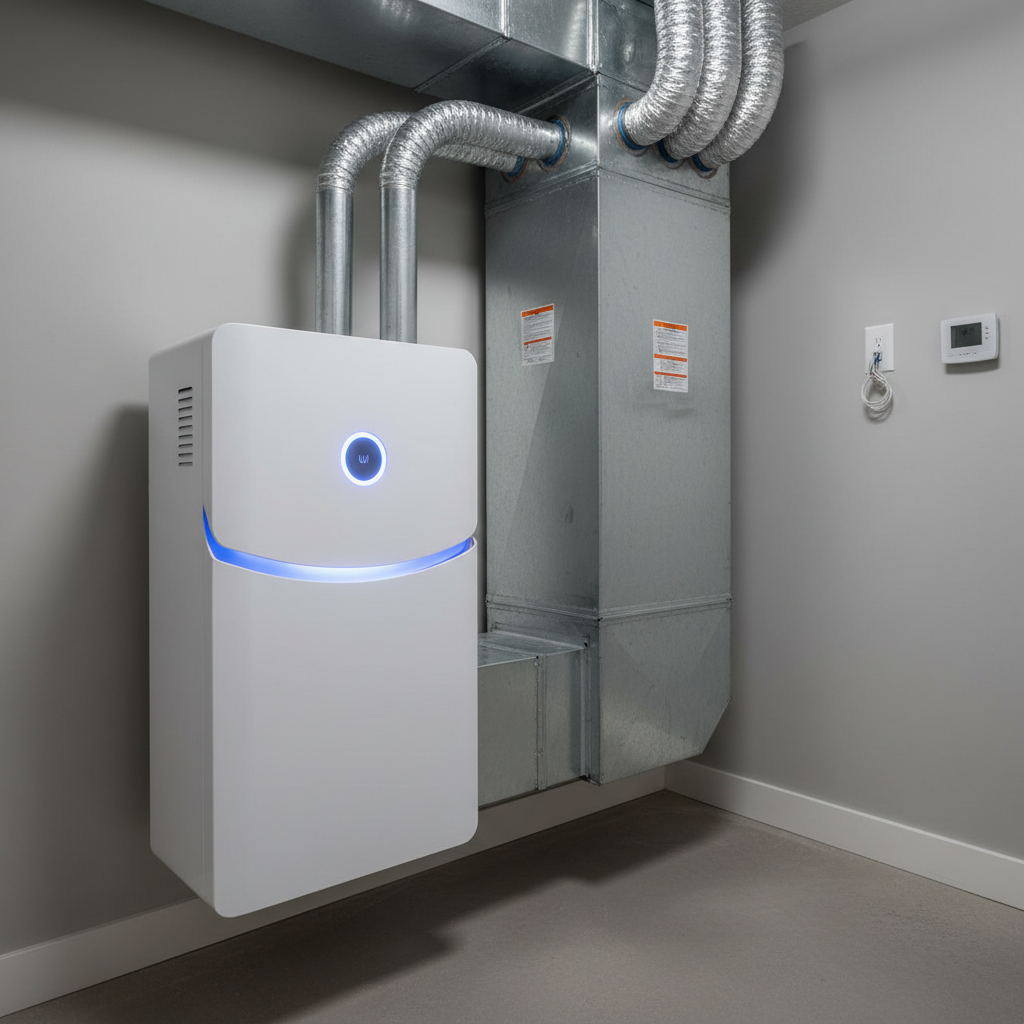
Indoor air quality is usually discussed as a product category, but it is really four separate problems with four separate fixes. Particles include dust, pollen, pet dander, and smoke. Humidity is a comfort and mold issue in summer and a comfort and static issue in winter. Stale air is a ventilation problem, because a well-sealed house does not exchange outdoor air the way an older one did. Sources are the contaminants that filtration cannot address, from a damp crawlspace to a garage attached through an unsealed door.
Getting these in the right order matters. Upgrading filtration in a house with a leaking return duct in a dusty attic will not improve the air, because the system is pulling contaminants in downstream of the filter. Adding a purifier to a house sitting at sixty-five percent relative humidity will not solve the musty smell. Diagnosis first, equipment second.
Our starting point is a walkthrough of the mechanical system and the house: filter type and size, return path, duct condition, humidity readings in the conditioned space and the basement, ventilation, and any obvious source like a crawlspace or a bath fan that vents into the attic.
Humidity is the biggest lever in Northern Virginia
In this climate, humidity does more to determine how a house feels than temperature does. A house at seventy-two degrees and sixty percent relative humidity feels clammy; the same house at seventy-five degrees and forty-eight percent feels comfortable. That is why lowering the thermostat on a humid day often does not help: the system is cooling, but it is not running long enough to remove moisture.
The comfort target is roughly forty-five to fifty-five percent relative humidity. In summer, a correctly sized air conditioner removes moisture as a byproduct of running. An oversized system satisfies the thermostat quickly and leaves the moisture behind. Setting the indoor fan to automatic rather than continuous also helps, because a fan that runs after the compressor stops re-evaporates water off the wet coil.
When a house will not get below the low fifties in summer even with a correctly sized system, a whole-home dehumidifier is the right tool. It removes moisture independently of cooling, which is what makes it useful in a basement, a finished lower level, or a tight, well-insulated house. In winter the problem reverses: heated air is dry, and a whole-home humidifier keeps the house in the thirty to forty percent range, which protects wood floors and reduces static and respiratory irritation.
Filtration and what MERV means
Filter ratings are described by MERV, and higher is not automatically better. A MERV 11 to MERV 13 filter captures far more fine particles than the fiberglass filter many homes still use, and it is a sensible upgrade for most houses with allergies or pets. But every filter adds resistance, and a high-MERV filter in an undersized filter grille or a system with marginal ductwork will reduce airflow, raise static pressure, and degrade performance.
The practical answer is usually a media filter cabinet sized generously for the equipment, with a filter that gets changed on a schedule that matches the household. A four- or five-inch media filter has more surface area than a one-inch filter, so it can carry a higher MERV rating with less pressure drop and it does not need changing as often.
Filter location matters too. A filter at the return grille protects the ductwork; a filter at the air handler protects the equipment. Homes with both are rare. We check where the filter actually is before recommending a product, because installing a high-MERV filter at the wrong location can starve the system.
Before you buy a purifier
Purification and ventilation
Ultraviolet systems are sold with broad claims about air quality. The honest version: a UV lamp installed at the evaporator coil can help keep the coil and drain pan free of biological growth in a humid climate, which is a real benefit because a dirty coil restricts airflow and can produce odors. A UV lamp in the airstream of a duct system has limited contact time and should not be expected to sterilize the air in a house.
For smoke days, wildfire smoke, and seasonal pollen, the most effective intervention is filtration plus a closed house, not a device that generates ozone. We do not install ozone generators, and we tell homeowners to be cautious about any product marketed on that basis.
Ventilation matters in newer, tighter homes. An energy recovery ventilator or a controlled fresh-air intake brings outdoor air in without dumping the associated humidity and heating load into the house. Bath and kitchen exhaust that actually vents outdoors, rather than into an attic, is the cheapest ventilation improvement most homes can make.
Diagnose, then install
An indoor air quality visit produces a plan, not a cart. We measure humidity in the conditioned space and the basement, inspect the filter and return path, check that bath and kitchen exhaust terminates outdoors, look at duct sealing and insulation, and ask about the symptoms you are trying to solve: allergies, musty odors, dust, dry air, or condensation on windows.
From there we recommend the smallest set of changes that addresses the cause, in order of cost effectiveness. Sometimes that is a filter upgrade and a sealed return. Sometimes it is a dehumidifier for a basement that has no other way to dry out. Sometimes it is ventilation. Occasionally it is a repair: a duct disconnected in an attic will undo every product you install downstream of it.
Every recommendation comes with a price and an explanation of what it will and will not do. If a product will not solve your complaint, we tell you that instead of selling it.
Ready for a free estimate on indoor air quality?
Get My Free EstimateIndoor Air Quality across Northern Virginia
Fairfax Mechanical serves homeowners in Fairfax, McLean, Arlington, Alexandria, Vienna and the surrounding communities. Choose your city for local service details.
See all areas we serveGuides worth reading before you book
Frequently asked questions about indoor air quality
Get a free estimate for indoor air quality
Licensed Virginia HVAC contractor serving Fairfax and all of Northern Virginia. Call or request an estimate and we will confirm the next available appointment.
11325 Random Hills Rd #360, Fairfax, VA 22030